
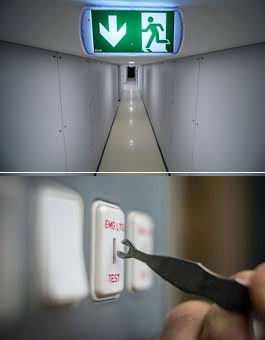
Emergency Light Testing Services
Emergency lighting is a critical component of a building’s fire safety system, designed to activate automatically during a power failure. Its primary purpose is to provide illumination, ensuring occupants can navigate safely to exits and avoid panic during emergencies.
By maintaining visibility in corridors, stairwells, and high-risk areas, emergency lighting supports safe evacuation and reduces the risk of injury. Compliance with UK standards, such as BS 5266-1:2016, ensures these systems are reliable and effective when needed most.
The main types of emergency lighting include:
Emergency Escape Lighting: This type is crucial for ensuring occupants can safely evacuate a building. It illuminates escape routes, including corridors, stairways, and emergency exits, guiding people to safety even in total darkness.
High-Risk Task Area Lighting: Designed for areas where potentially hazardous activities are carried out, such as manufacturing floors or labs. It provides enough light to ensure these tasks can be completed or safely stopped during a power failure.
Standby Lighting: Unlike escape lighting, standby lighting enables normal activities to continue during a power outage. It is not typically required for safety, but can be essential for maintaining operations in some businesses.
We offer 2 services:
1. Monthly tests, often called “Flick Tests,” are quick checks to ensure emergency lighting systems are operational. Here’s what the process involves:
- Simulate a Power Failure: Use the test switch to activate the emergency lighting.
- Inspect the Lighting: Confirm that all emergency lights illuminate as expected.
- Record Findings: Note any faults, including non-functioning lights or flickering, in a fire safety logbook. These records must be maintained for regulatory inspections.
- Report Issues: Notify the Responsible Person (the individual responsible for fire safety) of any faults so they can arrange prompt repairs.
Monthly tests should be simple enough for the Responsible Person or a competent staff member to perform with minimal training.
2. The full-duration test, conducted annually, is a more comprehensive inspection:
- Simulate Power Loss: Switch off the building’s main lighting circuit to ensure only emergency lights are active.
- Three-Hour Test: Emergency lights must remain illuminated for their rated duration, typically three hours, to comply with BS 5266-1:2016.
- Monitor Performance: Check for dimming, flickering, or lights failing before the test ends.
- Document and Report Issues: Record test results and arrange immediate repairs for any faults.
A competent person must conduct this test, and it is one of the main tests we carry out
Professional emergency lighting testing ensures that your building’s systems meet the highest safety standards and remain compliant with UK regulations, such as BS 5266-1:2016.
1. Compliance with Legal Requirements
UK fire safety laws mandate regular emergency lighting tests, including monthly and annual checks. Professional testers are well-versed in these requirements and ensure your building complies with the Regulatory Reform (Fire Safety) Order 2005 and other relevant standards. Non-compliance can lead to fines, legal action, and increased risk to building occupants.
2. Accurate Identification of Faults
Professionals use advanced tools and expertise to identify issues that may not be apparent during basic checks. This includes detecting:
- Failing batteries.
- Wiring issues or electrical faults.
- Dimming or flickering lights may indicate deeper problems.
Prompt detection and rectification ensure systems function effectively during emergencies.
3. Documentation and Record-Keeping
Maintaining accurate and comprehensive records of all tests is crucial for inspections and audits. Professional services provide detailed reports, highlighting:
- Test results for each light fitting.
- Identified faults and actions taken to resolve them.
- Compliance with regulatory standards.
These records serve as evidence of compliance and are vital in the event of an incident or fire safety audit.
4. Time and Cost Efficiency
While monthly “flick tests” can be managed in-house, annual full-duration tests can be complex and time-consuming. Professionals streamline the process, minimising disruption to your operations and ensuring cost-effective solutions for repairs and replacements.
5. Peace of Mind
Entrusting emergency lighting testing to qualified experts reduces the risk of oversight and assures that your building is fully prepared in the event of a power failure or emergency.
Get in Touch
Ensure the Safety of Your Business
Contact us to learn more about our affordable PAT Testing and/or Emergency Lighting Testing services and how we can assist you in maintaining compliance and safety.